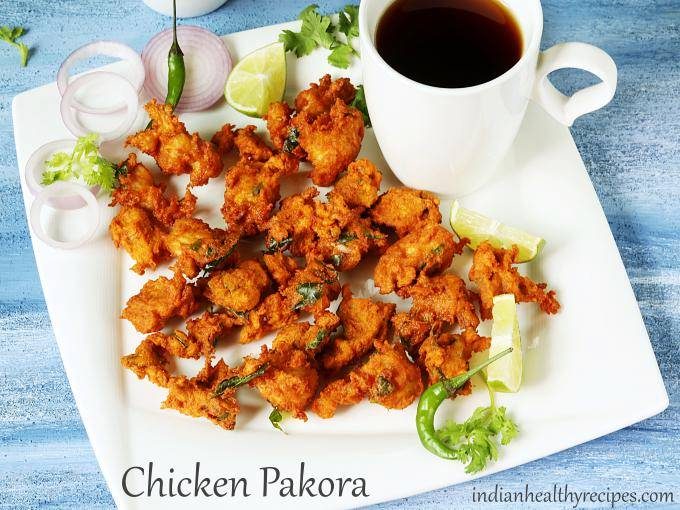
Chicken Pakora

Friday, October 18, 2024
 

Preparation

1. Add the following ingredients to a large mixing bowl:

  • 6 tablespoon besan (gram flour) (¼ cup + 2 tbsps)
  • 3 tablespoon rice flour or cornstarch
  • ⅓ teaspoon salt (adjust to taste)
  • ¼ teaspoon turmeric (haldi)
  • ¾ to 1 teaspoon Kashmiri red chili powder (reduce for kids)
  • ¾ to 1 teaspoon garam masala
  • ¾ tablespoon ginger garlic paste or crushed

Mix well and taste test. Add more salt and spice as required. It should taste slightly salty.

Next add the following

  • ¾ tablespoon ginger garlic paste or crushed ginger garlic
  • 1 to 2 green chilies chopped (optional)
  • 2 sprigs curry leaves or 2 tbsps mint leaves or coriander leaves chopped
  • ¼ cup onion (optional) fine chopped/sliced very thin

Chop 250 grams (½ lb) boneless chicken to uniform bite sized pieces. Add it here. After a good rinse I drained the water completely and added it.
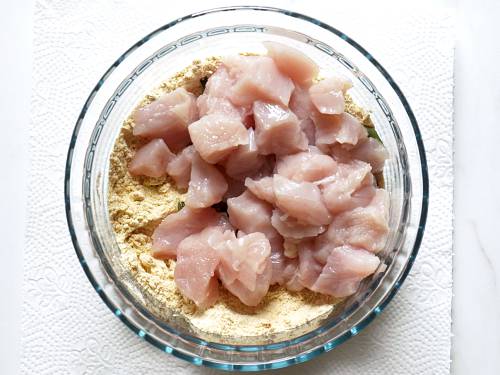

adding chicken

4. Pour 1 egg white. (read pro-tips below for egg substitute)

Begin to mix adding water only as needed. I add about 3 tbsps water. This may vary depending on the chicken and the size of egg.

6. Towards the end of this step, chicken should be well coated with the pakora mixture. The mixture has to be stiff – dough like and not like batter. Too mush moisture in the pakora mixture can make your chicken pakora soft and not crunchy.

Fix : You can add few tablespoons of flour in the same ratios to fix the excess moisture.

Fry Chicken Pakora

7. Heat oil in a deep pan/ kadai. Check if the temperature is right by sliding in little dough. It has to sizzle and rise to the surface without browning quickly. This is the right temperature.

Slide the chicken bites gently to the hot oil one after the other. Regulate the flame to medium to medium high.

It is very normal for the chicken pieces to stick up to each other in the mixing bowl. Just remove each piece of chicken and coat it well with the pakora mixture and slide them to the oil.

Pro-Tips

Chicken: Chop the chicken to bite sized pieces – 1 by ¾ inch size. Keep them as uniform as possible. This helps to fry the chicken evenly.

Flour: Rice flour or corn flour is the key to make these chicken pakora crisp. Do not skip it. If you do not use both then just go ahead using millet flour.

This recipe will give you crisp pakora, altering the ratio of besan to rice flour or corn flour may not give the same texture.

Herbs: We love these chicken pakora with lots of curry leaves & pudina. Both these flavor up the chicken pakora a lot. If you do not have both then use coriander leaves.

Moisture: Egg white and water are used to bind the dry ingredients with chicken. Please note that too much moisture can make your chicken pakora soft and not crunchy.

By any chance if the mixture turns soggy then add little flour and fix it. Do not fry the soggy mixture as the pakora turn too soft.

Frying: Always fry chicken pakora in moderately hot oil on a medium flame.

Frying them in extremely hot or smoking oil will brown them too quickly from outside without cooking inside. Next frying them on a low flame will make the chicken pakora hard, chewy and rubbery.


-------------

Veggie Pakora Ingredients

  • ▢ ½ cup besan (gram flour, more if needed)
  • ▢ ¼ cup rice flour (or 2 tablespoons corn starch, use more if needed proportionally with besan)
  • ▢ ½ teaspoon salt
  • ▢ 3 green chili peppers chopped or ½ to 1 teaspoon red chilli flakes (adjust to taste)
  • ▢ 2 tablespoons mint leaves or coriander leaves or dill leaves chopped
  • ▢ 1 teaspoon ginger garlic paste or crushed ginger
  • ▢ ¼ to ½ teaspoon garam masala powder (optional)
  • ▢ ½ teaspoons carom seeds (ajwain, optional)
  • ▢ oil for deep frying as needed

Mixed veggies julienned 2.5 to 3 cups

  • ▢ 1 medium carrot (¾ cup julienned)
  • ▢ ¼ cup capsicum (bell peppers)
  • ▢ 1 cup cabbage (shredded)
  • ▢ 1 medium onion (thinly sliced)
  • ▢ 6 french beans (julienned)
  • ▢ 1 cup spinach chopped (optional)

The Heart of South India - Andhra Pradesh

 Andhra Pradesh is home to fiery chiles, fresh fish, savory meat dishes, and people who live off the land and waters 

- Madhur Jaffrey


am in Rajahmundry, a town on the banks of the mighty Godavari River, as part of a slow, delicious journey to explore the many, varying cuisines of Andhra Pradesh. I am just about to eat in a mess.

Andhra messes (short for mess halls) serve freshly made vegetarian food very cheaply. Hotel Vasavi is a dark, basement joint where, for a dollar, I am offered two types of rice: one plain and one flavored with a well-spiced tomato sauce. Rice is the base of the meal. To add variety of flavor, texture, and nutrients, there's majjiga pulusu, mixed vegetables cooked in a buttermilk sauce; palakoora vepadu, a stir-fried spinach; a curry made from jackfruit; and sambar, a spicy lentil-based stew. Since fried foods are essential to the soft, wet meal I'm having, I order kosu vepadu, a crispy cabbage fritter, which looks a bit like Medusa's head, with the strands of shredded cabbage providing a crunchy, unruly halo. All of the foods are startlingly, marvelously hot.

Andhra Pradesh, near the Bay of Bengal, is known for its chiles, which are cultivated in the Guntur district, along the state's southeast coast, and are used to flavor the rice grown in the area's countless patties. Along with rice, there's a passion here for the pungent and sour. The sourness, which perks up meals and seems necessary to combat the soupy tropical climate, can come from limes, tamarind, vinegar, green mangoes, sour oranges, star fruit, and other local plants.

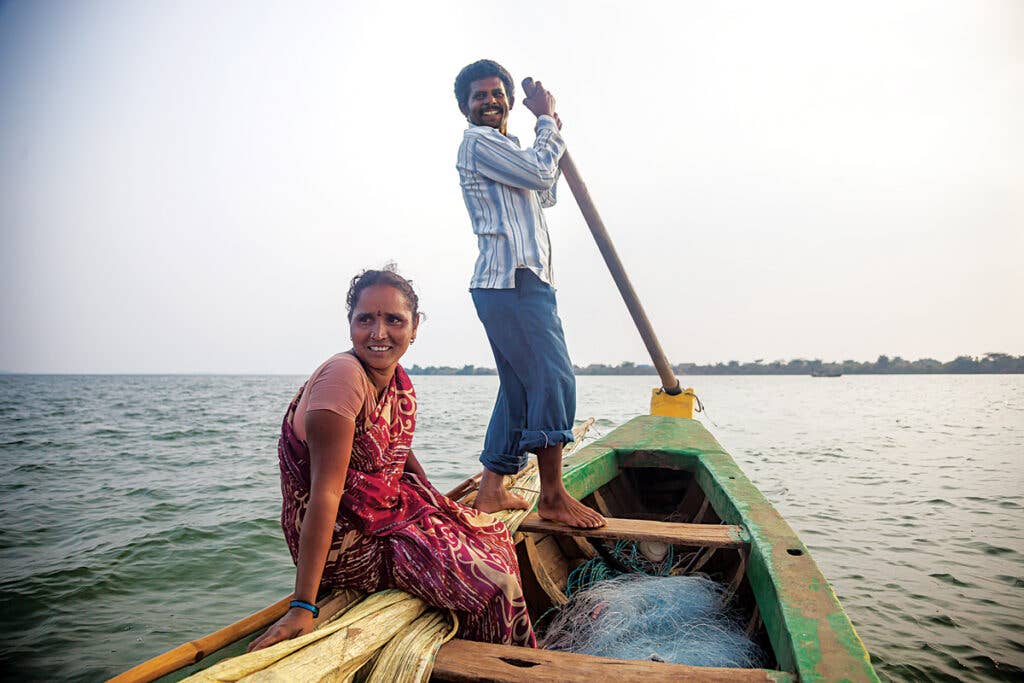
Seafood also figures prominently here. On a small island in the Godavari River, which runs through Andhra Pradesh to the bay, I watch as a home cook named Ramanna sets up an open wood-burning fire outside her thatched hut. She squats in her printed blue sari, cooking a simple dish of gongura, red, sorrel-like sour leaves with tiny river shrimp, the two main ingredients flavoring each other.

httpswww.saveur.comsitessaveur.comfilesimport2014feature_heart-of-south-india-river_1200x800.jpg

I drive farther west to join other aficionados at the Babai Hotel, a small but popular eatery in the city of Vijayawada known for the softest idlis, flying saucer-shaped steamed cakes made with rice and urad dal, black lentils. Large steamers huff and puff in the kitchen, turning out dozens of idlis at a time. Each is anointed with ghee and served with a pat of butter. They melt in the mouth. They may be eaten with a dry chutney known as podi or with sambar. Equally loved here is the pesarattu, Andhra's savory pancake. Made with a batter of whole mung beans, soaked, blended, and spread out thinly on a griddle, pesarattu is large, crisp, nutritious, and quite addictive. I eat mine with a creamy coconut chutney and some sweet, milky coffee on the side.

But the foods of Andhra are not all beans and vegetables. To feast on meat, I travel to the city of Telangana, in the northwestern part of the state. Since the 14th century, Muslim emperors from Delhi sent governors to rule the Telangana area, now known as Hyderabad state. The governors often rebelled and set up their own kingdoms, and the region slowly developed a unique cuisine that was part northern Muslim and part southern Hindu. A Telangana-style chicken cooked today by a Hindu might well have both the south's coconut milk and the north's yogurt, southern seasonings like curry leaves and lime juice, and northern spices like mace and cardamom.

It was the Nizams, the dripping-in-diamonds-rich rulers of the Asaf Jahi dynasty, starting in the 18th century, that had both the money and the leisure to become active patrons of this composite cuisine at its most elaborate. To taste it, you have to visit one of India's grandest hotels, the Falaknuma Palace. It's here I watch the making of a kacchay gosht ki biryani, a dish where rice and raw marinated meat are cooked together so magically that these disparate ingredients are done at the same time. Better yet, you have to be invited by one of Hyderabad's ever-courteous old families. I was lucky enough to receive a welcome from one aristocratic family while visiting. There I watched a housemaid named Rehana prepare a wonderful nihari, slow-cooked beef trotters, seasoned with potli ka masala, rare expensive spices, including sandalwood and rose petals, tied in a muslin bouquet garni. Rehana also prepared khatti dal, soured with tamarind and seasoned with curry leaves and mustard seeds. Pressure cookers whistled and hissed, and when we sat down to eat, there was plenty of rice for the dal, naan for the nihari, and pickles to eat with everything.

Mung Dynasty

 In honor of the 20th anniversary of SAVEUR, we asked some of the people who taught us the most to each peruse a year’s worth of issues and to reflect on them. Here, Madhur Jaffrey on a story from our August/September 2003 issue.

In SAVEUR's August/September 2003 issue, I came across a story about bindaeduk, that gorgeous Korean pancake made from a batter of soaked mung beans, crisp on the outside, soft, savory, and spicy on the inside. I had first tasted bindaeduk many years before, from a breakfast buffet at the Lotte Hotel in Seoul. And I continued to enjoy them in later years when, traveling around the Korean countryside, I found them at many fetes and fairs. I have always loved the melding of scallions, bean sprouts, spicy kimchi, and garlic with the mung bean batter, as well as the meaty depth from finely chopped pork. But it was the title of that SAVEUR article, "Mung Dynasty," that got me reminiscing.

The mung bean is native to India, where it has been eaten for at least 5,000 years. Because it is so easily digested, it is often the first legume many north Indian children are fed. I can still remember my mother holding me closely, and the feel of her freshly starched cotton sari, as she blew on a mixture of basmati rice and soupy mung beans to cool it before spooning it into my mouth.

When I was a little older, I'd line up with my brothers and sisters in our Delhi kitchen as my mother made us cheelay—Indian mung bean pancakes griddled in a manner similar to the Korean bindaeduk, but with vegetarian seasonings: finely chopped ginger, green chiles, onions, turmeric, salt, and cilantro. The youngest child was always served first, so I'd have to make do with inhaling the rich aromas while my little sister walked off triumphantly with her thin, crisp, but wonderfully pliable pancake. When my cheela was finally ready, I'd fall upon it greedily, breaking off a piece and folding it around a little bit of mango pickle or cilantro-yogurt chutney. All I needed then was a cup of sweet, milky tea to wash it down.


Roasted Moong Dal with Spinach


  •  1 cup skinned moong dal
  •  12 tsp. ground turmeric
  •  1 bay leaf
  •  34 lb. spinach, washed and cut into 1/2 in wide shreds
  •  1 tsp. salt
  •  12 tsp. red chili powder
  •  1 tbsp. vegetable oil
  •  12 tsp. cumin seeds
  •  2 fresh, hot red or green chillies, cut into 1 in. pieces

Step 1

Pick over the dal. Put it on a clean tea towel. Rub it gently to remove as much surface dust as possible. Heat a cast-iron frying pan over a medium-low flame. Allow it to get hot and then put the dal in it. Stir and roast until many of the grainsturn golden-red. (The colour will not be uniform, but that is all right.) Put the roasted dal in a bowl and wash it in several changes of water. Drain.

Step 2

Put the dal in a heavy-based pan. Add the turmeric, bay leaf and 1⁄4 cups of water. Stir and bring to a simmer. Turn the heat to low, cover, leaving the lid slightly ajar, and cook gently for about 1 hour until the grains are quite tender.

Step 3

Add the spinach, salt, red chilli powder and 2⁄3 cup of water. Stir and bring to a simmer. Cover and simmer gently for 30 minutes, stirring once or twice during this cooking period.

Step 4

Heat the vegetable oil in a small pan or frying pan. When hot, put in the cumin seeds. A few seconds later, when the seeds start to pop and sizzle, put in the red or green chillies. Stir once and then pour the contents of the small pan or frying pan over the cooked dal. Cover immediately.

Step 5

Note: The whole chillies should only be eaten by those who know what they are doing.


You’ll need both hands to eat this overstuffed tuna sandwich, lavished with fiery condiments and stacks of fixings, a North African take on a French pan bagnat. This recipe comes from Tunisian lunch counter Chez René et Gabin in Paris.


  • 3 Tbsp. olive oil
  •  2 garlic cloves, finely chopped
  •  ½ small yellow onion, finely chopped
  •  ½ small green bell pepper, seeded and finely chopped
  •  One 15-oz. can whole tomatoes, drained, crushed by hand
  •  1 bay leaf
  •  Kosher salt and freshly ground black pepper
  •  4 Portuguese or hero rolls (8 in. each)
  •  2 medium Yukon gold potatoes, boiled until tender, peeled, and thinly sliced
  •  1 medium ripe tomato, thinly sliced
  •  1 small English cucumber, thinly sliced
  •  Two 5-oz. cans tuna in oil, drained and flaked
  •  ½ cup pitted black olives
  •  ¼ cup capers, rinsed
  •  4 pepperoncini, stemmed and halved lengthwise
  •  ½ cup harissa, or to taste

Step 1

To a large skillet over medium-high heat, add the oil, garlic, onion, and pepper and cook, stirring occasionally, until soft and golden, 10–12 minutes. Stir in the tomatoes and bay leaf and cook, stirring frequently, until the sauce has thickened slightly, about 3 minutes. Discard the bay leaf, season to taste with salt and black pepper, and remove from the heat.

Step 2

Assemble the sandwiches: Leaving one side intact, split the rolls horizontally. Divide the tomato sauce among the rolls, spreading it in an even layer, then top—in the following order—with the potatoes, tomato, cucumber, tuna, olives, capers, and pepperoncini. Drizzle with harissa to taste, halve the sandwiches crosswise, and serve.


Kashmir Style जम्मू स्टाइल राजमा चावल

Sunday, October 13, 2024


Preparation time - 60 mins Serving - 6 Ingredients: Rajma (soaked) - 3 cups Fenugreek seeds - 1 tsp Bay leaves - 2 Black cardamom- 3 Cloves - 8 to 10 Asafoetida - 1/2 tsp Red chilli powder - 1.5 tsp Salt - 1/2 tsp Mustard oil - 4 tbsp Cumin seeds - 1 tsp Chopped ginger - 1 tsp Chopped garlic - 1 tbsp Green chillies - 2 tbsp Onion - 2 cups Turmeric powder - 1 tsp Kashmiri red chilli powder - 2 tsp Coriander powder - 1.5 tsp Tomato paste - 3/4 cup Cook it for 4 mins Curd - 2 tbsp Salt to taste Fennel powder - 1 tsp Coriander leaves For Tadka: Ghee - 2 tbsp Ginger - 1 tsp Garlic - 1 tsp Let it cool down a bit Dry fenugreek leaves -1 tbsp Red chilli powder -1 tsp For Jeera Rice - Boiled rice - 2 cups Ghee -2 tbsp Cumin seeds - 1 tbsp Coriander leaves Salt to taste

Two Tips:

Let the dough rest for 15 minutes
Make sure the oil is hot when adding the poori. Also make poori on high flame

Louki ki Poori : Louki -250 gm Wheat flour -250 gm Chilli flakes - 1 tsp Roasted cumin seeds -1/2 tsp Salt to Taste Cooking oil for frying Chutney Poori: Wheat flour -1 cup Coriander leaves - 1/2 cup Garlic cloves - 4 Cumin seeds -1 tsp Green chilli - 3 Salt to taste Cooking oil for frying Urad dal poori: Wheat flour -1 cup Urad dal (soaked)- 1/2 cup Green chilli - 2 Garam masala powder -1/2 tsp Asafoetida - 1/4 tsp Salt to taste Cooking oil for frying Palak Poori : Palak - 200 gm Wheat flour - 1 cup Red chilli powder -1/4 tsp Coriander powder - 1/4 tsp Cumin powder - 1/4 tsp Garam masala powder -1/4 tsp Salt to taste Cooking oil for frying Beetroot Poori: Wheat flour -1 cup Beetroot - 2 Carom seeds - 1/2 tsp Red chilli powder -1/4 tsp Gara masala powder -1/4 tsp Salt to taste Cooking oil for frying Ajwain Poori : Wheat flour -1 cup Carom seeds -1 tsp Ghee -1 tbsp Salt to taste Cooking oil for frying

Make Multiple Rotis at the same time

Marriage Reception Style Gajar ka Halwa


Preparation time : 50 mins Serving - 4 Ingredients: Carrot - 500 grams (grated) Sugar -1/2 cup Milk -2 cups Khoya/mawa - 1/4 cup Ghee -1/4 cup Cashews - 2 tbsp Raisins -2 tbsp Almonds - 2 tbsp