
Showing posts with label TravelArticles. Show all posts

The Heart of South India - Andhra Pradesh

Friday, October 18, 2024

 Andhra Pradesh is home to fiery chiles, fresh fish, savory meat dishes, and people who live off the land and waters 

- Madhur Jaffrey


am in Rajahmundry, a town on the banks of the mighty Godavari River, as part of a slow, delicious journey to explore the many, varying cuisines of Andhra Pradesh. I am just about to eat in a mess.

Andhra messes (short for mess halls) serve freshly made vegetarian food very cheaply. Hotel Vasavi is a dark, basement joint where, for a dollar, I am offered two types of rice: one plain and one flavored with a well-spiced tomato sauce. Rice is the base of the meal. To add variety of flavor, texture, and nutrients, there's majjiga pulusu, mixed vegetables cooked in a buttermilk sauce; palakoora vepadu, a stir-fried spinach; a curry made from jackfruit; and sambar, a spicy lentil-based stew. Since fried foods are essential to the soft, wet meal I'm having, I order kosu vepadu, a crispy cabbage fritter, which looks a bit like Medusa's head, with the strands of shredded cabbage providing a crunchy, unruly halo. All of the foods are startlingly, marvelously hot.

Andhra Pradesh, near the Bay of Bengal, is known for its chiles, which are cultivated in the Guntur district, along the state's southeast coast, and are used to flavor the rice grown in the area's countless patties. Along with rice, there's a passion here for the pungent and sour. The sourness, which perks up meals and seems necessary to combat the soupy tropical climate, can come from limes, tamarind, vinegar, green mangoes, sour oranges, star fruit, and other local plants.

Seafood also figures prominently here. On a small island in the Godavari River, which runs through Andhra Pradesh to the bay, I watch as a home cook named Ramanna sets up an open wood-burning fire outside her thatched hut. She squats in her printed blue sari, cooking a simple dish of gongura, red, sorrel-like sour leaves with tiny river shrimp, the two main ingredients flavoring each other.
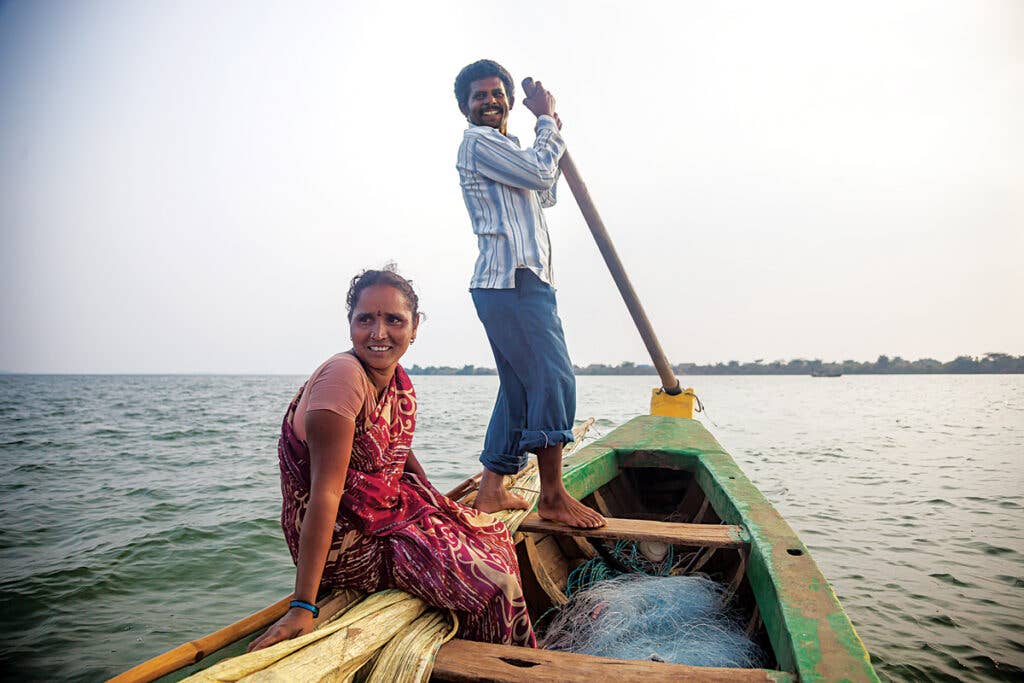
httpswww.saveur.comsitessaveur.comfilesimport2014feature_heart-of-south-india-river_1200x800.jpg

I drive farther west to join other aficionados at the Babai Hotel, a small but popular eatery in the city of Vijayawada known for the softest idlis, flying saucer-shaped steamed cakes made with rice and urad dal, black lentils. Large steamers huff and puff in the kitchen, turning out dozens of idlis at a time. Each is anointed with ghee and served with a pat of butter. They melt in the mouth. They may be eaten with a dry chutney known as podi or with sambar. Equally loved here is the pesarattu, Andhra's savory pancake. Made with a batter of whole mung beans, soaked, blended, and spread out thinly on a griddle, pesarattu is large, crisp, nutritious, and quite addictive. I eat mine with a creamy coconut chutney and some sweet, milky coffee on the side.

But the foods of Andhra are not all beans and vegetables. To feast on meat, I travel to the city of Telangana, in the northwestern part of the state. Since the 14th century, Muslim emperors from Delhi sent governors to rule the Telangana area, now known as Hyderabad state. The governors often rebelled and set up their own kingdoms, and the region slowly developed a unique cuisine that was part northern Muslim and part southern Hindu. A Telangana-style chicken cooked today by a Hindu might well have both the south's coconut milk and the north's yogurt, southern seasonings like curry leaves and lime juice, and northern spices like mace and cardamom.

It was the Nizams, the dripping-in-diamonds-rich rulers of the Asaf Jahi dynasty, starting in the 18th century, that had both the money and the leisure to become active patrons of this composite cuisine at its most elaborate. To taste it, you have to visit one of India's grandest hotels, the Falaknuma Palace. It's here I watch the making of a kacchay gosht ki biryani, a dish where rice and raw marinated meat are cooked together so magically that these disparate ingredients are done at the same time. Better yet, you have to be invited by one of Hyderabad's ever-courteous old families. I was lucky enough to receive a welcome from one aristocratic family while visiting. There I watched a housemaid named Rehana prepare a wonderful nihari, slow-cooked beef trotters, seasoned with potli ka masala, rare expensive spices, including sandalwood and rose petals, tied in a muslin bouquet garni. Rehana also prepared khatti dal, soured with tamarind and seasoned with curry leaves and mustard seeds. Pressure cookers whistled and hissed, and when we sat down to eat, there was plenty of rice for the dal, naan for the nihari, and pickles to eat with everything.

Chachi Ki Kachori Subzi Aur Jalebi | Subah-E-Banaras Aur Banarasi Nashta

Wednesday, June 26, 2024

Chachi ki dukan at Lanka was famous for the old lady who was fondly called Chachi (aunty). The shop was all about a small team of Chachi, mostly her family members who would churn out subzi and crisp kachoris on one side and hot crisp, syrup dripping jalebis on the other side of a small cramped shop. More of a hole in the wall actually.

Let me explain where exactly this shop is located. Lanka is the 'mall road' equivalent, situated in front of the BHU (Banaras Hindu University) gate and you would find all sorts of fancy restaurants, roadside stalls of samosa, chai, pao bhaji, burger, pakodas and bookshops or student utility shops all in one place. The end of this road branches into three roads leading to Saamne ghaat, Nagwa and Sankatmoachan temple road. When you walk towards Sankatmochan road you see twin shops of kachori and jalebi right at the start of the road. The one that has more people waiting is Chachi's I conclude. The husband confirms as he has grown up in BHU campus.

Another famous shop for kachoris in the morning is Pehelwan ki lassi shop that sells kachori subzi and jalebi in the morning and lassi and lavanglata throughout the day. This shop is located at the start of the road to Nagwa, to your right when you are coming from the university.

We enjoyed this banarasi nashta when we were in Banaras last time. Just wanted to have a taste of this famous kachori subzi aur jalebi made in front of my eyes. And there I was braving the smoke and burnt smell of refined oil, waiting for my kachoris. It was well worth it I would say. For the experience and for the taste as well, just the taste of burnt refined oil kills it for me. I am sure it was fried in dalda (hydrogenated vegetable oil) a couple of decade ago and in desi ghee before that. But ghee is history now for this shop at least. We have had ghee fired kachoris in other places and it makes a marked difference in taste and aroma.


Totally smoked walls, a rickety old table fan that blows air into the giant coal fired oven and a couple of men working in rhythm with a practiced ease. This guy was found rolling out kachoris fast, as if in tandem with the load of kachoris frying in the huge kadhai.


He quickly pinches off dough balls and arranges them on a wooden board, and then starts rolling kachoris fervently. He keeps dunking all the rolled kachoris into the huge kadhai with hot oil and another guy keeps frying the kachoris and arranging them all on a huge sieve.


And once the kachoris become a little colder, they are dunked again in the hot oil to fry them once again. This is the secret behind super crisp kachoris that break into pieces once punctured.


That doesn't mean I love those kachoris. I actually feel nauseous smelling this burning oil but I had to taste it once on the spot and photograph them making the famous kachoris of Banaras. I love kachoris and I hate refined oil that gets burnt in such kadhais and is never changed. Yes I asked them and they confirmed that they never ever change the oil. :-(

They ladle out heaps of kaddu ki subzi in dried leaf donas (disposable leaf bowls) and then arrange the kachoris on paper plates and hand out to the waiting people. Those white paper bags have jalebis in them, someone got them packed to take home.


And believe me there are always a dozen people waiting for these hot kachoris and kaddu ki subzi. I loved the subzi, the kachoris from such shops was never a favorite, but I can eat a couple of them. Hot and crisp and all that jazz.


Killer looks they certainly have. Did you see the jalebis too?

Spirals of jalebi were also being churned out on the other side of this hole in the wall shop. A thick slurry like fermented batter of maida with a hint of besan added is filled in an earthen pot and the batter is dropped in a constant stream in hot oil. Making circular patterns while it flows out. I love this part of making jalebis and was missing doing it myself. Been long time since I made jalebis.


The spirals are fried both sides till they turn golden. Being turned and picked up with the help of tongs.


And then being dunked into a thick sugar syrup. To be quickly weighed down with the help of that huge sieve, so the jalebis soak up the syrup instantly.


After a couple of minutes in the syrup and the juicy crisp jalebis are sieved out from the syrup, the sieves doubles up as the display shelf.


The jalebis fly off the 'shelf' quickly as people are already waiting to get their hands of garam garam jalebis (hot jalebis). Here it is, one portion of the jalebi for the dessert part of the banarasi nashta. Quite a calorie high, inflammatory fats high breakfast it is.


Interestingly, I had never seen this chachi as I would never pass that road in the wee hours when banarasi nashta was being devoured standing in a meditative trans facing this little shop by Chachi. Chachi is no more but I have heard stories about how people would ask her questions to tease her about bad kachoris or a soggy jalebi and she would shower them with choicest abuses in local dialect. It was more of a good breakfast with entertainment thrown in for good measure, as I have heard people saying.

The entertainment came to us in the form of curiosity some people had in our camera. You see we had a good time enjoying this nashta and then walked towards Sankatmochan temple to work out the damage.

The Disappearing Art of Traditional Indian Breakfast

Saturday, February 20, 2021

One of the first things that Thane-based food consultant Saee Koranne Khandekar tells us is that her food is going to leave us disappointed. “Because they are so easy to make,” says Khandekar, in response to our quizzical looks.

She hops in and, in 45 minutes, out of the kitchen, having made the ragi-based Ambil, the upma-like Tandulachi Ukad and Amboli or rice, mixed lentils dosa. Served alongside mango chutney, peanut chutney and creamy soft white butter, these typical Maharastrian breakfast items taste delicious and are loaded with nutrients.

Which makes it a pity that they have almost disappeared from the diet of the average, train-hopping Mumbaikkar.

Breakfast is from Britain

Besides declaring the idli-sambhar-filter kaapi combo as the most nutritious of all Indian breakfasts, the recent India Breakfast Habits Study also noted that 79 per cent of those who were surveyed in Mumbai had breakfasts low in nutrition. Delhi and Kolkata followed at 76 and 75 per cent.

Interestingly, India never had the tradition of having a proper breakfast to begin with. The breakfast is one of the remnants of the British rule in India, explains food historian and author Salma Husain.

“The nawabs and the maharajas led very lavish lives where they would wake up at 10 or 11 in the morning, after their late night mehfils till three in the morning. And when they woke up, they feasted on puris, potatoes, parathas and kebabs,” explains Husain, who has written a book on Mughal cuisine, The Emperor’s Table.

In Lucknow, the average Joe had nimish, especially in winters. “Milk was kept in a bowl and then kept outside overnight. Dew would fall on this and the next morning, the froth that is collected at the top would be eaten with rotis.

But now with pollution, what dew can you get?” chuckles Husain.

Not only meals, but a range of nutritious ingredients are also on their way out. Vibha Varshney, who works for the Delhi-based Centre for Science and Environment and has more recently, co-authored the book First Foods, says that farmers in wetlands in the eastern side of the country no longer grow makhana or fox nuts, which is a more nutritious alternative to corn flakes. “These are very expensive and there is no market for it so people go in for corn flakes,” explains Varshney.

Memories of food 

Sometime in the past, people in Calicut, Kerala, used to wake up to the smell of breads like puttu, idiappam, vella appam ari pathiri and other staple breakfast items like pori unda (puffed rice and jaggery), brain and liver fry, remembers 52-year-old Abida Rasheed, who is based in Calicut.

“Breakfasts used to be very important for us as we used to live in a joint family. We didn't have the custom of sending the daughter away after marriage, instead we had the son-in-law stay with us. Certain tharavads  (ancestral homes) may still follow this custom of having an elaborate breakfast, but otherwise it has totally disappeared,” she explains.

To Kolkata-based advertising professional Kaniska Chakraborty, Sunday mornings meant having subtly spiced shingaras (a smaller version of the samosas) jeelipis or the chickpea dish, ghugni.

“The jeelipis are smaller and thicker than a normal jalebi. You could bite into them and they would yield – they are not as crispy as the jalebi. Both have been replaced by the samosa and jalebi,” adds Chakraborty, who also hosts a food show on the radio.

Delhi-based food blogger Sangeeta Khanna can think of at least three breakfast items that people simply don't make anymore. “Gond ke laddu with milk,” she rattles off. “This was a very healthy desi granola kind of breakfast which included a good balance of carbohydrates, proteins, good fats and loads of minerals.

Dahi chiwda, another desi cereal breakfast, and besan ki pinni with milk which used to be a good energetic breakfast, full of good protiens, fats and some carbohydrates.