The Best Prime Rib You’ll Ever Make (Restaurant-Quality) | Epicurious 101
Tuesday, December 24, 2024


Preserving recipes and memories

Total Time
15 minutes
Yield
4 servings
Combine ½ stick (¼ cup) unsalted butter, ¼ cup packed dark brown sugar, 1 tsp. cinnamon, ½ tsp. freshly grated nutmeg, ¼ tsp. ground cloves, ⅛ tsp. kosher salt, and 2 cups water in a 1½–2-qt. saucepan. Place over medium-high heat and bring just to a boil; reduce heat and simmer, whisking occasionally, about 10 minutes until fragrant and slightly reduced. Remove from heat and stir in ⅔ cup aged dark rum. Serve hot.
Editor’s note: This hot buttered rum recipe was first printed in the February 2006 issue of ‘Gourmet.’ Head this way for more of our best Christmas cocktails →
Tips from readers:
We've used this recipe exclusively for the last 3 years. It's SO easy and delicious. We discovered that the addition of a splash of cream, half & half or a dollop of whipped cream smoothes it out. This year, we swapped the water for oat milk, just to see what would happen. It was SO mellow! New favorite! Also, I melt the butter with the spices before adding the liquid. I think it makes the spices pop a little more. Perfect winter warm-up drink!
delicious as written but even better if you sub half the water with apple cider (reduce sugar) and add a squeeze of lemon. also tossed in some star anise, yum.
Add a splash of cream/half&half to each cup for extra richness!
Active Time
50 minutes (not including decorating)
Total Time
2 hours 15 minutes
Is there anything more comforting at the holidays than curling up by the fire with a gingerbread cookie and a warm cup of tea? (Laughing with family and friends around a plate of decorated sugar cookies runs a close second.) Whether you want to make gingerbread people, snowflakes, candy canes, ornaments—or even skeletons for Halloween—this Gourmet classic should be your go-to.
For this old-fashioned gingerbread cookie recipe, you’ll boil the spices with molasses and brown sugar to bloom their flavor. Then you’ll make the cookie dough right in the saucepan by adding in baking soda, cold butter (to bring down the temperature of the mixture), an egg, and the dry ingredients. There’s no baking powder here, which means your gingerbread men will keep their shape. If your dough feels too soft to work with easily, you can refrigerate it for 30 minutes to an hour; alternatively, if you want to make the cookie dough ahead of time, refrigerate it up to three days ahead and let it sit out at room temperature for 20 to 30 minutes to soften before rolling.
The cook time on these cutout cookies will vary depending on the size cutters you use, so keep a close eye on them. To mitigate burning, line your cookie sheets with parchment paper.
The decorating icing in this recipe is optional, but it’s a great upgrade from plain powdered sugar glaze. It’s a variation of royal icing that incorporates lemon juice, vanilla extract, and powdered egg whites, the last of which helps to stabilize the icing and gives it a polished, matte appearance when dry.
Editor’s note: This recipe makes a soft gingerbread cookie with a slightly crispy exterior. For a cookie with more crunch, look to these gingersnaps. Or, if you love chewy gingerbread, consider making these spiced brownies. Is a gingerbread house more your style? We dare you to try your hand at this cardamom-spiced Mid-Century masterpiece.
Makes about 4 dozen cookies
Bring molasses, brown sugar, and spices to a boil in a 4- to 5-quart heavy saucepan over moderate heat, stirring occasionally, and remove from heat. Stir in baking soda (mixture will foam up), then stir in butter 3 to 4 pieces at a time, letting each addition melt before adding next, until all butter is melted. Add egg and stir until combined, then stir in 3¾ cups flour and salt.
Preheat oven to 325°F.
Transfer dough to a lightly floured surface and knead, dusting with as much of remaining ¼ cup flour as needed to prevent sticking, until soft and easy to handle, 30 seconds to 1 minute. Divide dough in half, then wrap one half in plastic wrap and keep at room temperature.
Roll out remaining dough into a 14-inch round (⅛-inch thick) on a lightly floured surface. Cut out as many cookies as possible with cutters and carefully transfer with offset spatula to 2 buttered large baking sheets, arranging them about 1 inch apart.
Bake cookies in upper and lower thirds of oven, switching position of sheets halfway through baking, until edges are slightly darker, 10 to 12 minutes total (watch carefully toward end of baking; cookies can burn easily). Transfer cookies to wire racks to cool completely. Make more cookies with remaining dough and scraps (reroll once).
Beat together the powdered sugar, powdered egg whites, lemon juice, vanilla extract, and ⅓ cup water in a large bowl with an electric mixer at moderate speed until just combined, about 1 minute. Increase speed to high and beat icing, scraping down side of bowl occasionally, until it holds stiff peaks, about 3 minutes in a standing mixer or 4 to 5 minutes with a handheld.
Note: If you plan to spread (rather than pipe) icing on cookies, stir in more water, 1 teaspoon at a time, to thin to desired consistency.
If using food coloring, transfer ¼ cup icing to a small bowl for each color and tint to desired shade. Spoon icing into a pastry bag (if using), pressing out excess air, and snip a ⅛-inch opening in corner of bag. Twisting bag firmly just above icing, decoratively pipe icing onto cookies. Decorate with sprinkles, sanding sugar, and dragées, if using. Let icing dry completely (about 1 hour) before storing cookies.
Do ahead: Gingerbread cookies keep in an airtight container at room temperature 3 weeks.
Editor's note: This recipe was originally printed in the December 2002 issue of ‘Gourmet’ as Gingerbread Snowflakes and first appeared online in August 2004. Head this way for more of our best Christmas cookies →
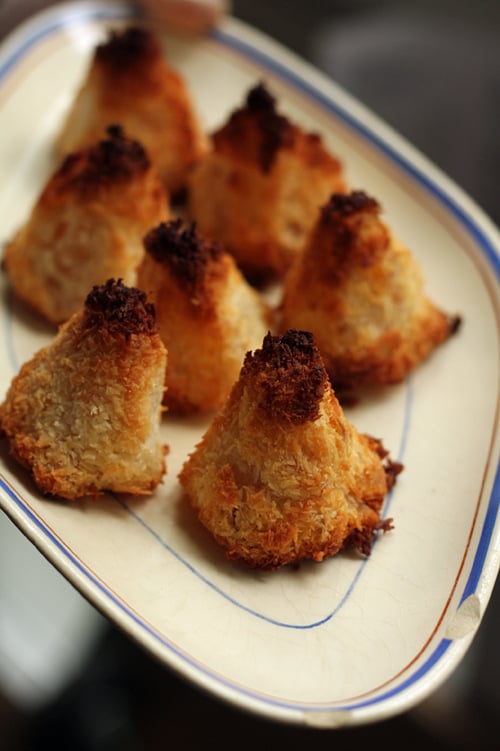
| Pineapple-Coconut Macaroons - David Lebovitz |
| About 35 cookies |
| Once baked, the nicely browned cookies will have a delightfully crackly crust. But the inside remains soft and slightly sweet, thanks to the bits of caramelized pineapple tucked inside. So be sure to cook them so they are entirely browned all the way up the sides.
|
Storage: These cookies are best served the day they’re made, since over time, they’ll lose their slightly crunchy crusts. You can store the batter up to five days in the refrigerator and bake them off as desired.
Notes: Unsweetened coconut is available in shops that specialize in ethnic ingredients and in natural food stores. It’s also available online on Amazon.
I’ve not tried this recipe using sweetened coconut flakes since it often contains additives and preservatives. So do try to seek out unsweetened shredded coconut, which is sometimes called dessicated coconut.
Eagle-eyed readers will note that I baked these on foil, since I was using a kitchen that wasn’t mine. You can use it as well, although I prefer parchment paper.
Makes about 7 dozen cookies
In a bowl soak cranberries in warm water to cover 15 minutes. Drain cranberries well and chop fine.
Preheat oven to 350°F.
In bowl of a standing electric mixer beat cranberries, oats, and zest into basic dough until just combined well. Form dough into 1-inch balls and roll balls in sugar to coat. Arrange balls 2 inches apart on baking sheets and flatten to 2-inch rounds with bottom of a glass wrapped in wax paper to prevent sticking.
Bake cookies in batches in middle of oven until pale golden, about 12 minutes, and cool on racks. Cookies may be stored between layers of wax paper in airtight containers up to 6 weeks frozen.
Prep Time
25 minutes
Total Time
35 minutes
This is a no-nonsense chewy oatmeal cookie recipe. It’s not an oatmeal raisin cookie recipe. There are no cranberries or chocolate chips, no pecans, peanut butter, coconut, or any other add-ins, either (not even dates)—nothing that could divert attention from the buttery comfort of this classic cookie.
Old-fashioned oats—not quick oats—give these favorite cookies just the right chewy texture, while vanilla extract and ground cinnamon lend them the warmth and spice that’ll keep you coming back to the cookie platter for more. Soften your butter to room temperature, and make sure your eggs are at room temperature, too, so that they blend easily into the cookie dough. Doing some last minute baking? Here’s how to soften butter quickly.
The best oatmeal cookies are evenly sized (so they bake evenly) and perfectly round, so it’s ideal to use a #70 sized cookie scoop to portion the cookie dough into tablespoon-size balls. Place the dough balls at least 2 inches apart on parchment paper–lined cookie sheets since they’ll spread as they bake.
Editor's note: This recipe was originally published in the September 1999 issue of ‘Gourmet’ and first appeared online on August 20, 2004.
Makes 24 cookies
Preheat oven to 375°F. Grease and line 2 baking sheets with parchment.
Stir together oats, flour, cinnamon, baking soda, and salt in a medium bowl. Beat together butter, brown sugar, and granulated sugar in a stand mixer or in large bowl with a hand mixer until light and fluffy. Add egg and vanilla and beat until combined well. Add flour mixture and beat until just combined.
Drop dough by heaping tablespoons 2 inches apart onto prepared baking sheets and flatten mounds slightly with moistened fingers. Bake cookies in upper and lower thirds of oven, switching position of sheets halfway through baking, until golden, about 12 minutes total. Transfer to wire racks to cool.