ADAPTED SLIGHTLY FROM JERUSALEM, BY YOTAM OTTOLENGHI AND SAMI TAMIMI
The original version of this recipe calls for conchiglie, or shell-shaped pasta, but you could use any small pasta shape you like: orecchiette, penne, farfalle, and so on.
If you have some exotic type of dried chile, like Urfa chile, Aleppo chile, or Kirmizi biber, you lucky lucky dog, this is a great place to use it. If not, you can use regular red pepper flakes. I happened to have some Aleppo chile, and though it was ground, not in flakes, and probably a few years old, it worked beautifully. Oh, and if you’re worried about the amount of heat, consider starting with a little less of the chile than what is called for – or just don’t put much chile oil on your pasta.
2 ½ cups (500 g) whole-milk Greek yogurt
2/3 cup (150 ml) olive oil
2 medium cloves garlic, crushed or pressed
1 pound (500 g) fresh or thawed frozen peas
Kosher salt
1 pound (500 g) pasta shapes of your liking
Scant ½ cup (60 g) pine nuts
2 teaspoons Turkish or Syrian chile flakes, or red pepper flakes
1 2/3 cups (40 g) basil leaves, coarsely torn
8 ounces (240 g) feta cheese, coarsely crumbled
In the bowl of a food processor, combine the yogurt, 6 tablespoons (90 ml) of the olive oil, the garlic, and 2/3 cup (100 g) of the peas. Process to a uniform pale green sauce, and transfer to a large mixing bowl.
Bring a large pot of water to a boil, and salt it until tastes like pleasantly salty seawater. Add the pasta, and cook until it is al dente. While the pasta cooks, warm the remaining olive oil in a small frying pan over medium heat. Add the pine nuts and chile flakes, and cook for 4 minutes, or until the pine nuts are golden and the oil is deep red. Also, warm the remaining peas in some boiling water (you could scoop out a bit of the pasta water for this); then drain.
Drain the cooked pasta into a colander, and shake it well to get rid of excess water that may have settled into the pasta’s crevices. Add the pasta gradually to the yogurt sauce; adding it all at once may cause the yogurt to separate. Add the warm peas, the basil, feta, and 1 teaspoon kosher salt. Toss gently. Serve immediately, with pine nuts and chile oil spooned over each serving.
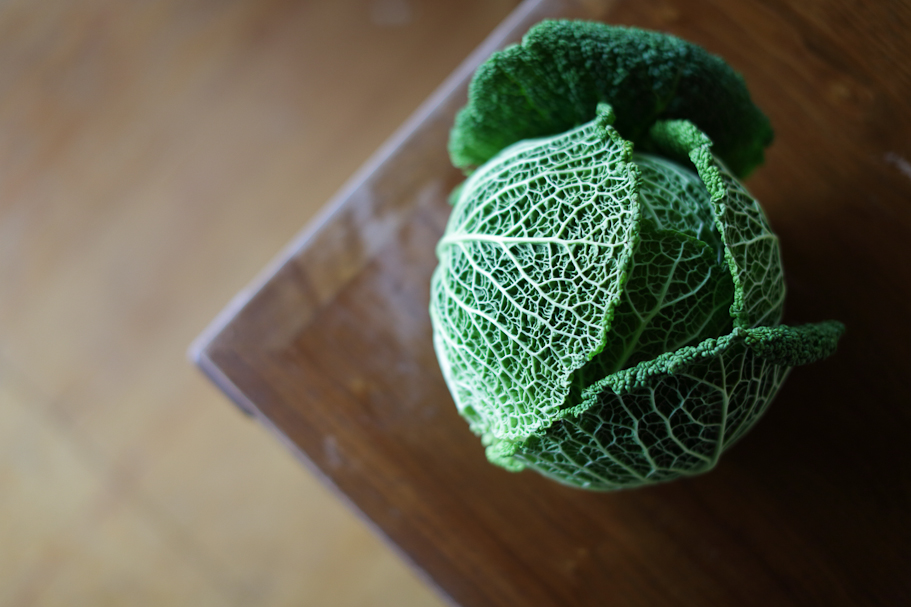
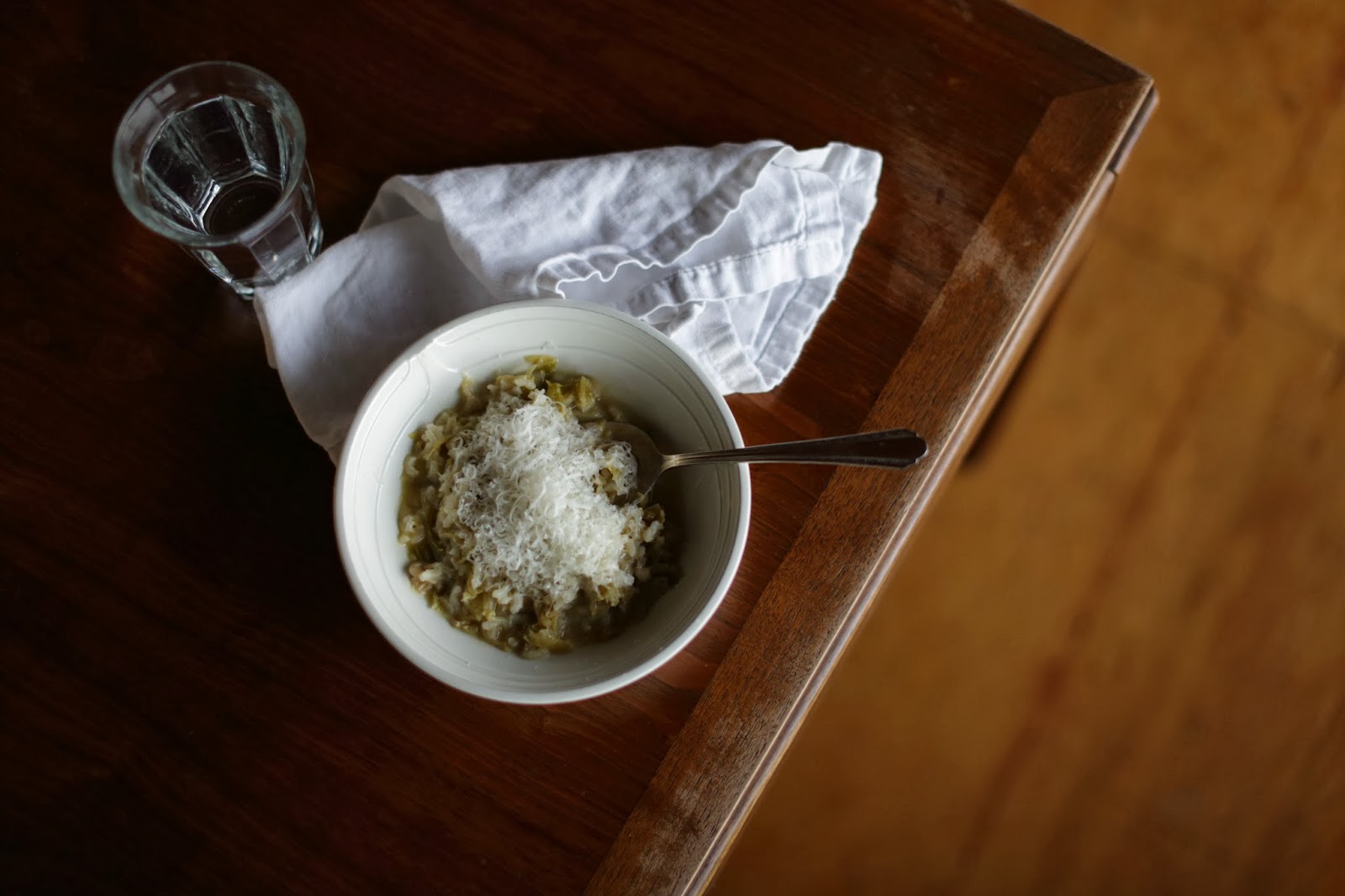
This particular soup, however, is only approximately a soup. I don’t know that I would have even thought to call it a soup, actually, except for the fact that its author, the wonderful, recently departed Marcella Hazan, called it that. She called it Rice and Smothered Cabbage Soup. To me, it’s closer to a risotto, a risotto that starts with an entire head of Savoy cabbage, shredded and cooked very gently in plenty of olive oil, until it gives up the fight and goes sweet and tender and limp as a rag. (I am simile-impaired tonight. Limp as… the arm of a sleeping person? Limp as… soft as… a pile of silk ribbon? Ribbon that you can cook with rice and broth and then eat?) This soup exemplifies one of the best lessons I’ve learned from Italian food: namely, that cooking vegetables for a long time, until they fall apart, or nearly fall apart – what we non-Italians might wrongly call overcooking vegetables – works like no other method to draw out their intrinsic sweetness and deepest, fullest flavor. (Another good example of this is my friend Francis’s eggplant pasta sauce, which, if you haven’t yet made, do.)
I first learned about this recipe almost six years ago, from Luisa, who posted it on her site. I made it not long after, and I considered writing about it here, but I figured that was probably redundant. So I quietly kept making it and not telling you about it. I made it most recently last Saturday night, after a day spent traveling home from our family Thanksgiving celebration (accidentally leaving behind our stroller on the steps of my cousin’s house in California! Losing our off-site airport parking stub! Craning our necks to find our car as the kind, young shuttle driver made loop after loop after loop around the lot!), and Brandon and I sat on the living room floor after June went to bed and ate big bowls of it in front of our first fire of the season, and when we both went back for seconds, I thought, The people need to know.
You can’t really tell that it’s a soup up there under that small mountain of grated Parmesan, but that’s for the best, because it’s not the most handsome soup around. The cabbage is cooked for almost two hours, long enough that its color comes to approximate that of a canned pea. But. You take that cabbage and cook it some more, now with broth and rice. (This part only takes about twenty minutes, so if you made the cabbage ahead of time (it freezes well), it’s almost an instant dinner. Instant-ish.) And when the rice is tender and the soup is thick and steaming and has a bolstering, reassuring look about it, you stir in some butter and Parmesan, and then, if you live in our house, you eat it with more Parmesan on top.
About 1/3 cup (roughly 1 heaping handful) freshly grated Parmesan cheese, plus more for serving
Kosher salt
Freshly ground black pepper
In a good-size pot (about 4 quarts), combine the cabbage, the broth, and 1 cup of water, and bring to a boil over medium-high heat. Stir in the rice, and then lower the heat so that the soup bubbles at a slow but steady simmer. Cook uncovered, stirring occasionally, until the rice is tender but firm to the bite, about 20 minutes. If you find that the soup is becoming too thick, add a little water. The soup should be pretty dense, but there should still be some liquid.
When the rice is done, turn off the heat, and stir in the butter and the grated Parmesan. Taste, and correct for salt. Serve with black pepper and more Parmesan.
Yield: 4 to 6 servings - and try to save some for later, because these leftovers make a lunch worth looking forward to
1 (~2-pound / 1 kg) Savoy or green cabbage, quartered, cored, and very thinly sliced
2 or 3 large garlic cloves, chopped
Kosher salt
Freshly ground black pepper
1 Tbsp. white or red wine vinegar
Put the onion and olive oil in a Dutch oven (or another pot of approximately the same size), and set over medium heat. Cook and stir until the onion is pale gold, and then add the garlic. Continue cooking until the garlic is fragrant and looks cooked through, a few minutes, and then add the sliced cabbage. Stir a few times to coat the cabbage with oil; then continue to cook until it’s wilted. Add a couple of generous pinches of salt, a grind or two of pepper, and the vinegar. Stir to mix, and then cover the pan and reduce the heat to the lowest setting. Cook, stirring occasionally, for at least 1.5 hours, or until the cabbage is very, very tender. If the pan seems dry at any point, you can add a tablespoon or two of water. When the cabbage is done, taste for salt, and season as needed.
This cabbage can be made a few days ahead of the soup, if needed, and it also freezes nicely.
ADAPTED VERY SLIGHTLY FROM PLENTY, BY YOTAM OTTOLENGHI
A few introductory side notes: for the stock, I used Better Than Bouillon, and for dried apricots, I like Trader Joe’s “California Slab Apricots.” For chickpeas, I used canned. For harissa, I stole some from the Delancey walk-in, wa ha haaaa, but you can make your own, or you can buyit. For preserved lemons, we make tons of them at Delancey – preserved Meyer lemons, actually! The best – and use them on pizzas and in starters, and if you’ve got time, hey, you can make some too. If not, they’re usually available at shops selling Mediterrean or Middle Eastern ingredients, and I’ll bet Whole Foods has them, too. And really, I know: this ingredients list is long – long enough that, in my experience, it can be easy to get lost and forget to add something. I’ve tried to make it more foolproof here by dividing it up according to what is added when. Maybe it’ll help?
Preserved lemons = use a small knife (or even a spoon) to scrape the pulp from the preserved lemon, leaving just the peel. (Discard the pulp, or use it sparingly in salad dressing; it's reeeeeeeally salty. Generally, people use only the peel of preserved lemons.) Finely chop the peel, and stir it in. It may look like a lot, but it's correct.
And as for couscous, you'll want ordinary couscous, not Israeli – it's often sold as “instant couscous.”
First:
2 medium carrots, peeled and cut into ¾-inch chunks
2 medium parsnips, peeled and cut into ¾-inch chunks
8 shallots, peeled
5 tablespoons olive oil, divided
2 cinnamon sticks
4 star anise
3 bay leaves
½ teaspoon ground ginger
¼ teaspoon ground turmeric
¼ teaspoon paprika
¼ teaspoon red pepper flakes
Kosher salt
Then:
2 ½ cups peeled, cubed pumpkin or butternut squash (from a 10-ounce / 285-gram squash)
Then:
½ cup (about 70 grams) dried apricots, roughly chopped
1 cup (about 200 grams) chickpeas, canned or freshly cooked
1 ½ cups (350 ml) water or chickpea cooking liquid
Preheat the oven to 375°F, and set a rack in the middle position. Put the carrots, parsnips, and shallots in a large ovenproof dish (a 9×13-inch is perfect). Add 4 tablespoons of the olive oil, and toss to coat. Add the spices, cinnamon sticks through pepper flakes, as well as ¾ teaspoon kosher salt. Mix well. Bake for 15 minutes. Then add the pumpkin or squash, and stir to mix. Return to the oven, and continue cooking for about 35 minutes more, by which time the vegetables should have softened while retaining a bite. Now, add the dried apricots, chickpeas, and water or chickpea cooking liquid. Stir to mix, then continue to bake for 10 minutes more, or until hot.
About 15 minutes before the vegetables are ready, put the couscous in a large heatproof bowl with the remaining 1 tablespoon olive oil, the saffron, and ½ teaspoon kosher salt. Pour the boiling stock over the couscous, and immediately cover the bowl with plastic wrap or a tight-fitting lid. Set aside for 10 minutes. Then add the butter, and fluff with a fork until the butter melts in. Cover again, and leave somewhere warm.
Just before serving, take the vegetables out of the oven, and stir the harissa and preserved lemon. Taste for salt.
Serve the vegetables over the couscous, with plenty of cilantro leaves on top.
Take bacon fat and a little butter and cook some onions, then fry the cabbage in that for a few minutes. (The cabbage i cut into squares and wash) i cover it in chicken stock and season it with pepper and the tiniest amount of salt and I cook it until almost all the chicken broth has evaporated and the cabbage is tender. Its SOs favorite veggie.Serve with cornbread, always.
Cabbage rolls....or "unconstructed cabbage rolls". ground beef and onions sauteed together...minced garlic added when it's almost done, salt to taste and paprika added and about half cup of raw rice....then add carrot buttons, celery slices and chopped cabbage layered in an oven safe dutch oven, can of whole roma tomatoes broken up on top....mix the juice with about 1/3 cup of brown sugar and pour over the top.. ( more or less sugar depending on how much you are making) cover and bake at 300 until the cabbage and vegetab;les are VERY well done....about 2 hours. Check about every 30 to 40 minutes to be sure it's not cooking dry....add a bit of water if it seems to be.
You can leave it in layers if you are only cooking like 1 pound of meat and a very small head of cabbage....or mix it all up if you are filling the pot!
Cut up two packages of sausage - one hot, one mild - start them cooking in a large stew pot. Crush a large head of cabbage and add it to the pot. In another pot, boil a large bag or two of cavatelli, but not completely. Drain and add to the stew pot. Garlic powder, basil, black pepper, and brown sugar to taste. Cook for at least an hour and serve with fresh garlic bread.
I always put cabbage in vegetable and vegetable beef soups. I use it in stir fries with other vegetables and keep it on hand for coleslaw (I grate an apple into my coleslaw, along with grated carrots). I need to cook it as a side vegetable but never have. I will try Amylou's recipe. A head of cabbage lasts a long time, a good staple. Looking forward to finding a good brisket for corned beef and cabbage next month.
Plating: Banh cuon can be eaten warm or at room temperature. To warm, place a single layer of banh cuon on a plate or dish, cover with a damp paper towel and microwave for 30-60 seconds.Jan 1, 2013
Eating Banh Cuon
Banh cuon is eaten with fresh veggies like cucumbers, mint, cha lua, fried shallots, and nuoc cham. You can customize your toppings however you like. After making this batch, I brought some over to a friend’s place, and she wasn’t a huge fan of the cha lua. So she ate just the banh cuon with the cucumbers. I personally LOVE the cha lua, so I ate her portion too lol.
Arrange a rack in the middle of the oven and heat the oven to 425ºF. Coat a 9x13-inch baking dish with cooking spray.
Coarsely chop 4 garlic cloves and place in a large bowl. Add 1/2 cup lemon juice, 1/3 cup olive oil, 1/4 cup yellow mustard, 2 teaspoons dried oregano, 1 teaspoon kosher salt, and several grinds of black pepper, and whisk to combine.
Cut 2 pounds Yukon Gold potatoes into 1-inch thick wedges, add to the bowl, and toss to combine. Pour everything into the baking dish and spread into an even layer. Pour 1/2 cup water over the potatoes. Cover the baking dish tightly with aluminum foil.
Bake until the potatoes are fork tender, about 1 hour. Uncover and bake until the liquid is evaporated and the potatoes begin to brown, 15 to 20 minutes more.
One of my all time favorite comfort food …. Thanks to my dearest friend Sunita, who gave me wonderful white Iskus from her kitchen garden which inspired me to make this dish … Used my Grandma’s recipe for Pork curry ( with zero oil , just cooked in the Pork fat … although I am sure the calories are not less !!!) and added huge chunks of Iskus… my Mom’s style…. With cooking delegated only to weekends ( back to a full time job !!!) , this is worth the wait …. Enjoy and Happy Cooking ~ Kamakshi
Prep Time : 10 mins Cook Time : 15 mins Serves : 6
INGREDIENTS 1 Kg Pork , cut into medium size cubes 4 Medium size , Chayote Squash ( Iskus) cut into big chunky pieces ( I just make 4 chunks out of 1 Iskus) 2 Large Onions, finely diced or made into a paste 7 Cloves of Garlic, finely diced 2 tsp Ginger Paste 3 Medium Tomatoes , finely diced 1 tsp Turmeric (Haldi) 1 tsp Chilli Powder Salt to taste
METHOD In a pressure cooker, first add the pork meat. On top of the meat , layer with the chopped onions, garlic, ginger and tomatoes. Sprinkle chill powder, turmeric and salt on top and add 1 cup of water. Cover the pressure cooker and cook for 10 mins till the meat becomes tender. Switch of the gas, release the steam from the cooker and open the pressure cooker. The gravy will be watery when you check the meat. Add the chunks of Iskus to the meat, mix well. Put the pressure cooker cover again and pressure cook for another 10 mins. No additional water is required. Switch of the gas and let the pork and Iskus steam inside the pressure cooker. After 5-10 mins , open the cooker , gentle mix so that the iskus pieces do not become mushy. Serve hot with plain rice.