Showing posts with label Eggplant. Show all posts

Garlic Eggplant & Crispy Tofu

Tuesday, November 4, 2025


Stir-fried Chinese eggplant and tofu, tossed in a simple garlicky sauce and topped with green onion.

 Ingredients

  
  • 1 lb Chinese eggplants (about 2 medium Chinese eggplant), or sub normal eggplant
  • 1 block extra firm tofu
  • 3 green onions greens and whites separated and sliced thin
  • 1 tablespoon freshly minced garlic
  • ~¼ cup cornstarch
  • veggie oil
  • toasted sesame seeds for topping
For Sauce:
  • 2 tablespoon soy sauce
  • 2 tablespoon oyster sauce or sub vegan oyster sauce
  • 1 tablespoon dark soy sauce or sub 1 tablespoon regular soy sauce + 1 teaspoon brown sugar
  • ½ tablespoon black vinegar or sub rice vinegar
  • ½ tablespoon ginger paste or fresh grated ginger
  • 1 tablespoon brown sugar
  • ½ teaspoon MSG optional
Instructions
5. To the skillet, add another generous swirl of veggie oil. Once warm, add the cubed tofu pieces. Cook, stirring occasionally, until the tofu is golden and crispy on most sides, about 10 minutes. Once cooked, remove to a plate.

6. Add a little more oil to the skillet, once warm add the garlic and the whites of the green onion. Cook until fragrant, about 1 minute, stirring constantly. Add the sauce and mix everything together, then add the tofu and eggplant back to the skillet. Remove from heat and mix everything together. Top with the green onion greens and sesame seeds, serve immediately with white rice.


https://www.craftycookbook.com/_print/garlic-eggplant-crispy-tofu
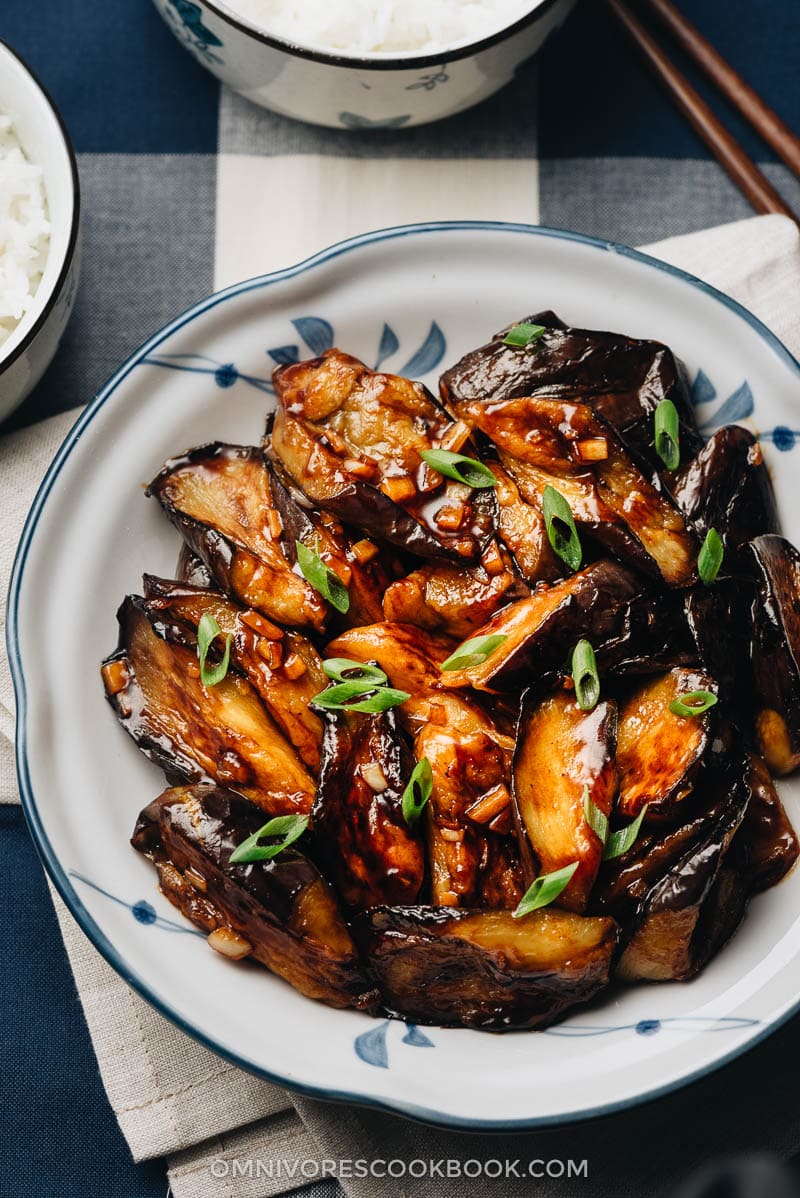
Chinese Eggplant with Garlic Sauce (红烧茄子)

Wednesday, October 19, 2022

Published: 04/30/2015Updated: 06/21/2020Author:

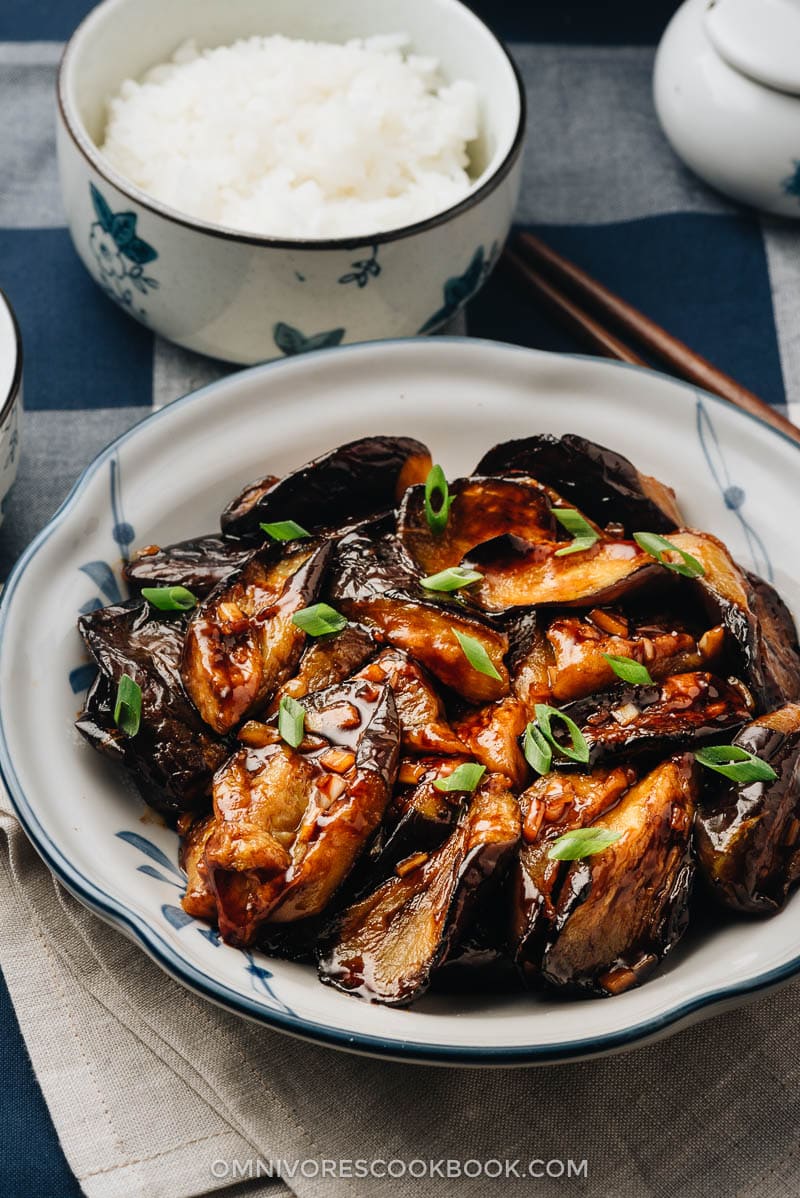
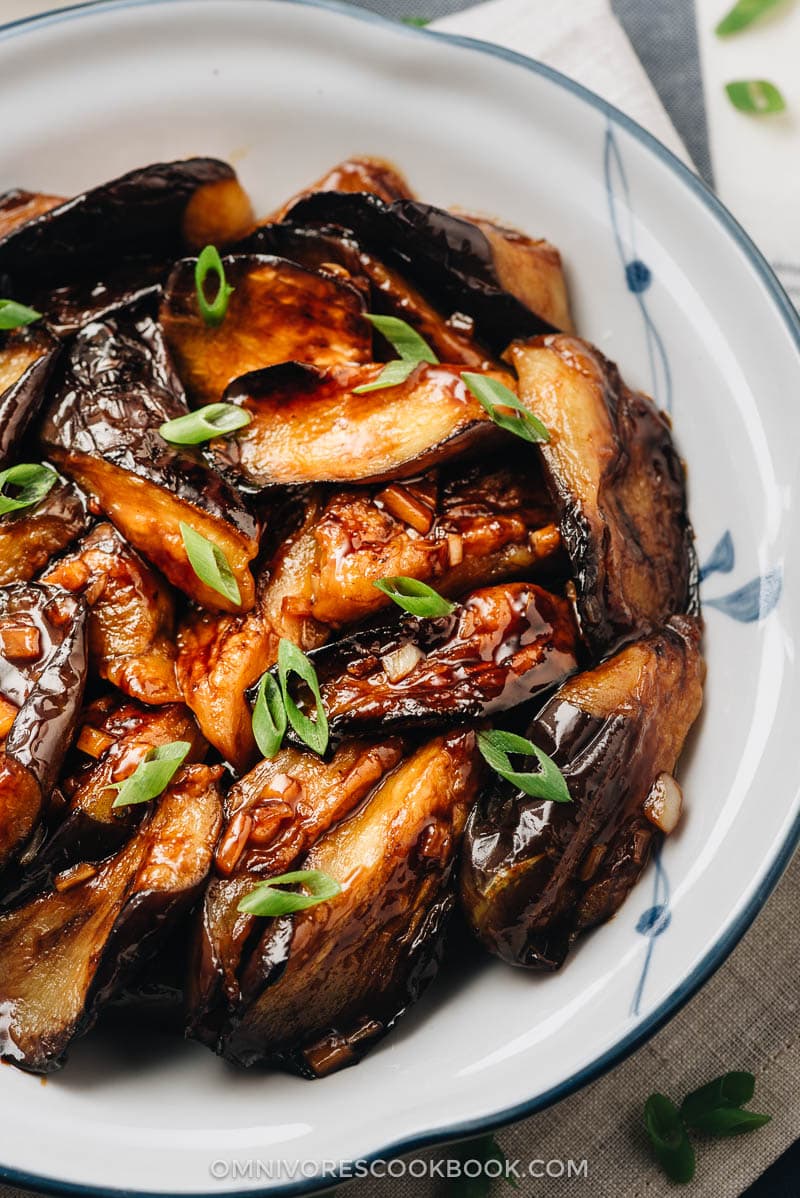
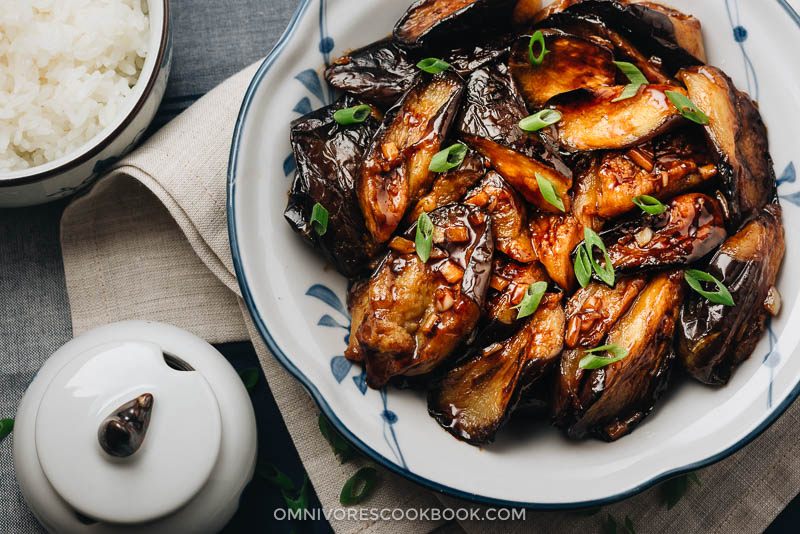
The eggplant is grilled until crispy and smoky, and then cooked in a rich savory garlic sauce. This vegan dish is very satisfying, both as a side or a main dish served over rice or noodles. {Gluten-Free Adaptable}

Chinese eggplant with garlic sauce

Eggplant is a very tricky vegetable to cook. If you don’t season it properly, it will taste bitter or extremely plain. If you use too little oil, the texture will be mushy and create an awful mouthfeel. If you use too much oil, the eggplant might turn soggy and greasy.

This recipe offers the simplest way to cook a great eggplant dish without using too much oil, and avoids soggy and plain eggplant with the minimum needed cooking time.

Homemade Chinese eggplant with garlic sauce

How to make the perfect eggplant dish

The secret to getting perfect Chinese style eggplant involves two things.

  1. You have to prepare the eggplant properly before cooking in order to get the right texture.
  2. You need to make a sauce that is flavorful enough.

To prepare the eggplant, there are two ways to do it.

Before introducing the first method, I want to thank my friend Steve S. He taught me this method quite a long time ago, to prevent the eggplant from absorbing oil.

The method is:

  1. Spread the sliced eggplant on a towel.
  2. Sprinkle Kosher salt on both surfaces of the sliced eggplant.
  3. Allow to rest for 45-60 minutes.
  4. Pat each surface dry.
  5. Do not rinse the eggplant.

The second way is:

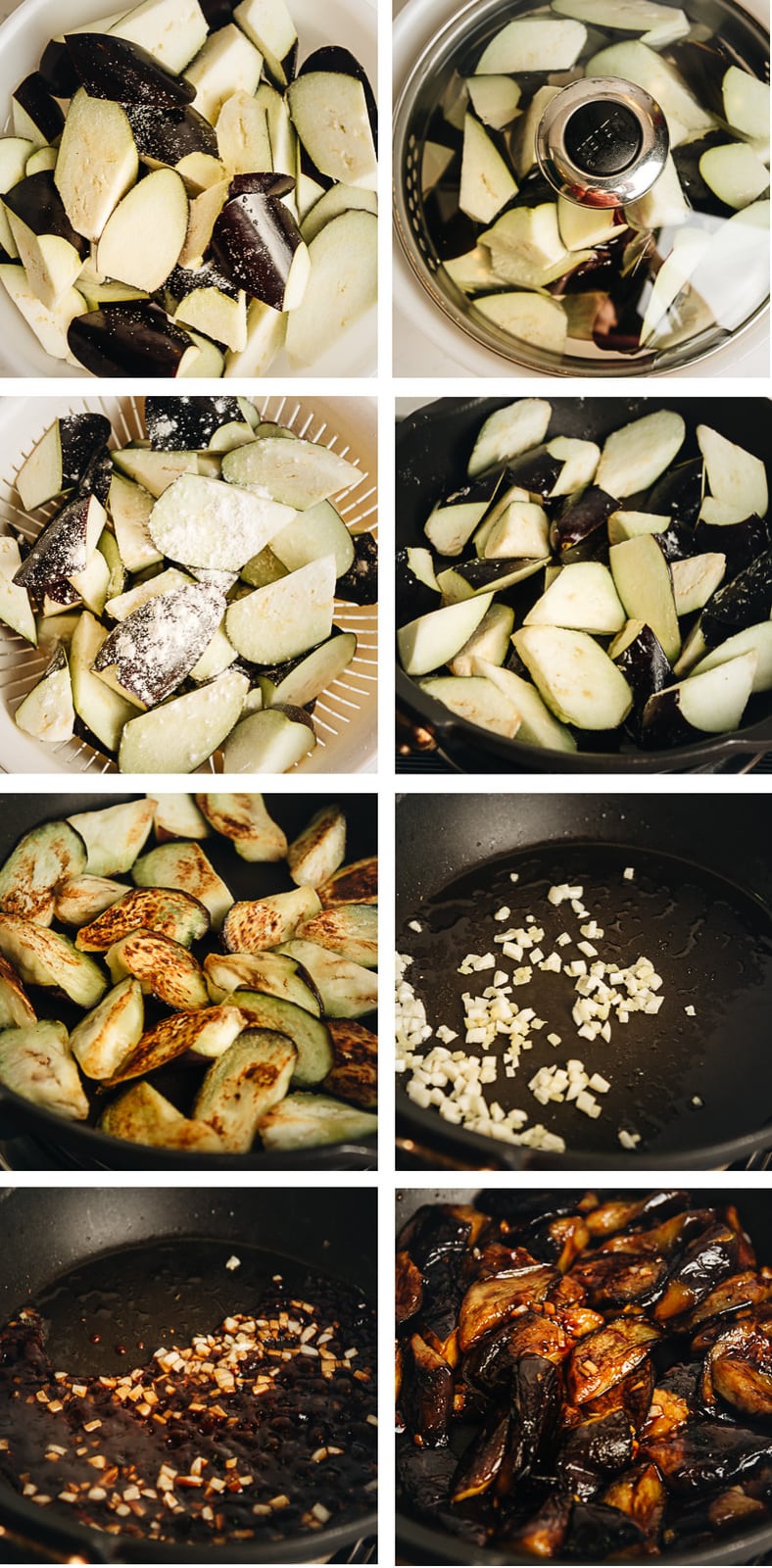
  1. Place the eggplant in a large bowl and add water to cover.
  2. Add 1/4 teaspoon salt, mix well.
  3. Place a pot lid on top to keep the eggplant under water for 15 minutes.
  4. Drain and pat dry

The second method requires a bit more effort, but it saves a bit of time. Both ways yield great results.

Chinese eggplant with garlic sauce close up

Once you’ve finished either of the methods above, there is one more step – after the eggplant is completely dry, sprinkle cornstarch over it and mix by hand, until the eggplant is evenly coated with a thin layer of cornstarch.

Using this method, you can create crispy and nicely charred eggplant on the stovetop in 10 minutes. No need to turn on the oven to get the smoky flavor!

Creating a good sauce is really easy. Just mix everything together and pour it over the eggplant at the end of cooking.

Home made Chinese eggplant cooking step by step

Chinese eggplant with garlic sauce served in plate

Imam Bayildi - Turkish Eggplant

Sunday, October 25, 2020


Purple patch: Yotam Ottolenghi’s Turkish-style aubergine recipes

It’s known as the ‘poor man’s meat’, but I prefer to think of aubergine as the ‘vegetarian’s rich treat’

Photograph of imam bayildi dish
Yotam Ottolenghi’s imam bayildi: ‘Serve with Turkish bread, to mop up the juices.’ Photograph: Louise Hagger for the Guardian. Food styling: Emily Kydd

Aubergines are known as “poor man’s meat”, but I prefer to think of them as “vegetarian’s rich treat”, especially when you crave something hearty and “meaty” but don’t want to eat actual meat. The Turkish imam who, legend has it, fainted with pleasure after tasting a stew of aubergines and other vegetables would certainly agree. The dish in question, imam bayildi (which translates as “the imam fainted”), has gone on to be a classic of Turkish cuisine, as has the 17th-century Ottoman sultan’s treat of smoked aubergine puree topped with diced stewed lamb or lamb meatballs, or hünkar begendi (“sultan’s delight”). I, for one, feel exactly the same way.

Imam bayildi

Best eaten the day after it’s made, and served at room temperature. I don’t routinely salt aubergines (modern varieties tend not to be bitter, which is what salting was designed to counter), but in this case I do because it’s a time-honoured way to ensure they’re properly seasoned. Serve with Turkish (or other soft white) bread, to mop up the juices, and Greek yoghurt. Serves four.

4 aubergines, long, slim ones, ideally
1 lemon, halved
Salt and black pepper
120ml olive oil
1 onion, peeled and thinly sliced
2 red peppers, core and seeds removed, cut into long 1cm-wide strips
2 big garlic cloves, peeled and sliced thin
1½ tsp ground cumin
1 tsp paprika
400g tinned tomatoes
½ tsp caster sugar
2 sprigs fresh oregano
¾ tsp dried oregano (Greek, ideally; or fresh oregano, picked and chopped)

Shave long, alternate strips of peel off the aubergines, top to bottom, so they end up striped, like zebras. Starting 2cm from the top, make an incision halfway into the flesh and cut down to 2cm shy of the bottom.

Put the aubergines in a large bowl and cover with two and a half litres of cold water. Squeeze in the lemon, drop in the skins and stir in two teaspoons of salt. Put a plate on top, to keep the aubergines immersed, and leave to soak for 45 minutes. Drain, then dry in a clean tea towel.

Heat the oil in a large saute pan on a medium-high flame. Fry the aubergines for eight to 10 minutes (take care, because the oil may spit), turning regularly, until nicely browned on all sides. Remove from the pan, turn down the heat to medium-low, add the onion and peppers, and cook for 10 minutes, stirring often, until soft but not coloured. Add the garlic and spices, cook for a minute, then stir in the tomatoes, two tablespoons of water, the sugar, fresh oregano, half a teaspoon of salt and a good grind of pepper. Turn the heat to low, put the aubergines on top of the veg, cover the pan and cook for 45 minutes, until the aubergines are steamed through.

In the meantime, heat the oven to 180C/350F/gas mark 4. Carefully lift out the cooked aubergines and place them cut side up in a 20cm x 30cm ceramic baking dish; they should be nice and snug. Prise open the aubergines, so they look like long canoes, then sprinkle the insides with a generous pinch of salt. Discard the oregano from the sauce, then spoon it into the aubergines, filling them as much as you can; don’t worry if some sauce spills out around them – it’s kind of unavoidable. Cover with foil and bake for 35 minutes. Remove the foil and leave the aubergines to cool to room temperature. Serve topped with a sprinkling of dried oregano.

Brinjal / Eggplant Curry

Sunday, September 20, 2020

 Brinjal curry with milk: -

Cook this entire curry in medium flame.

You might go with 1 big onion for 1 big brinjal 

Adding lot of green Chilies and less red chili powder gives more taste to this curry - 6 green chilies.

Onions should be mediumly chopped for this curry.

When you cut brinjal, soak it in saltwater to remove any bitterness /color change.

1st Tadaka --- No garlic, no ginger, add curry leaves if you have.For tadka adding lot of oil gives more taste.

Add onions and sauté until transparent 

Then add brinjal, I also prefer to add Drumsticks incase if you have the frozen ones.

Now add salt and red-chili powder according to the taste.

Cover the lid and sauté every 3-4 minutes to avoid sticking in the bottom.

In medium flame I think it doesn’t take more than 15-20 min for the brinjals to cook based on the quantity.

Note: - don’t cook until brinjal turns mushy or paste.

Once brinjal seem to be cooked, add 1 rice cup of milk of 1 big brinjal and cook it in the slow flame.


After adding milk cooking in low flame and sauté continuously to avoid breaking of milk. 

Once it forms a nice consistency you can turn it off (it need not be thick) . it shouldn’t take you more than 3-5minutes in low flame.


 Brinjal Curry - 


- Once you add the milk, does the dish keep long or do you have to eat it all at once? --- Taste  does not go bad untill 2 days , but I wouldn’t suggest to heat it more than 1-2 times .

- I have frozen drumsticks - when do I add them? Just add it with brinjals 

- Should I follow the ingredients in your recipe which is fewer than the YouTube and also did not have dal tadka.

I think you can go with the ingredients in the word document and you can completely ignore dal for tadka , jeera and mustard seeds are sufficient I guess.


Badi Curry - what was the mix of dal tadka that the person was using? He was using jeera, broken urad dal, Toor dal, and mustard seeds .


Brinjal Curry With Milk

Sunday, June 21, 2020


Cook this entire curry in medium flame.  You might go with 1 big onion for 1 big brinjal 
Adding lot of green Chilies and less red chili powder gives more taste to this curry - 6 green chilies. Onions should be medium chopped for this curry. When you cut brinjal, soak it in saltwater to remove any bitterness /color change. 

 1st Tadaka --- No garlic, no ginger, add curry leaves if you have.For tadka adding lot of oil gives more taste. 

Add onions and sauté until transparent
Then add brinjal, I also prefer to add Drumsticks in case if you have the frozen ones.
Now add salt and red-chili powder according to the taste.
Cover the lid and sauté every 3-4 minutes to avoid sticking in the bottom.
In medium flame I think it doesn't take more than 15-20 min for the brinjals to cook based on the quantity.
Note: - don't cook until brinjal turns mushy or paste.

Once brinjal seem to be cooked, add 1 rice cup of milk of 1 big brinjal and cook it in the slow flame.

After adding milk cooking in low flame and sauté continuously to avoid breaking of milk.

Once it forms a nice consistency you can turn it off (it need not be thick) . it shouldn't take you more than 3-5minutes in low flame